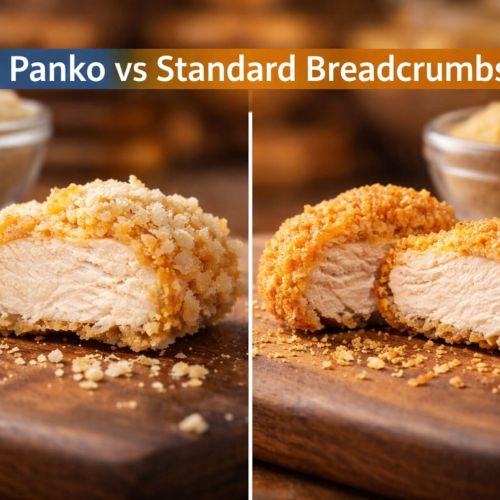
In industrial fried chicken production, breadcrumb choice directly affects coating texture, oil absorption, and coating stability during frying and freezing.
Two of the most commonly used crumb types are panko breadcrumbs and standard breadcrumbs. While both are used in breaded poultry products, their structure and performance differ significantly in industrial processing environments.
Understanding the difference between these coating systems helps poultry processors choose the right breadcrumb for their product and production line.
Panko breadcrumbs originate from Japanese cuisine and are known for their large, light, and flaky structure.
Unlike traditional breadcrumbs, panko crumbs are typically produced using crustless bread and a specific drying method that creates irregular, airy particles.
In fried chicken applications, panko breadcrumbs are often used when processors want to achieve:
a very crispy texture
a light coating appearance
a more open crumb structure
Panko is commonly used in products such as premium fried chicken fillets and restaurant-style breaded poultry.
Standard breadcrumbs are the most commonly used coating material in industrial poultry processing.
They are typically produced from baked bread that is dried and milled into a more uniform crumb structure.
Compared to panko, standard breadcrumbs provide:
more controlled coating pickup
better adhesion with batter systems
more consistent performance in high-volume production lines
For this reason, standard breadcrumbs are widely used in products like chicken nuggets, schnitzels, and coated chicken portions.
| Feature | Panko Breadcrumbs | Standard Breadcrumbs |
|---|---|---|
| Structure | Large, flaky particles | Smaller, uniform particles |
| Texture | Very crispy, airy | Compact, even coating |
| Oil Absorption | Lower | Moderate |
| Coating Pickup | Lighter | Higher |
| Production Stability | Less stable in some lines | Highly stable |
| Typical Products | Premium fried chicken | Nuggets, schnitzel, fillets |
For large-scale poultry processors, coating stability and consistency are usually more important than visual texture alone.
Standard breadcrumbs are often preferred in high-throughput production because they provide:
stable adhesion with batter systems
consistent coating pickup
reliable performance during frying and IQF freezing
However, panko breadcrumbs are sometimes used for products where texture and visual crispiness are key product attributes.
In practice, the choice depends on:
the coating system (predust, batter, crumb)
the type of poultry product
desired texture and appearance
production line parameters
When selecting breadcrumbs for fried chicken products, processors typically evaluate several technical factors:
Breadcrumbs must adhere properly to the batter layer to prevent coating detachment.
Uniform particle size supports consistent coverage and coating pickup.
Breadcrumb structure should remain stable during frying without excessive breakdown.
In IQF poultry production, coating must maintain structure after freezing and reheating.
For poultry processors, selecting the right breadcrumb supplier is just as important as choosing the crumb type.
Reliable suppliers typically provide:
consistent crumb structure
industrial production capacity
specification-based product development
stable logistics and supply continuity
Processors often work with suppliers capable of adjusting crumb profiles according to coating systems and production conditions.
Both panko and standard breadcrumbs play important roles in fried chicken production.
Panko breadcrumbs provide a lighter, crispier coating, while standard breadcrumbs offer greater consistency and stability in industrial processing lines.
For poultry processors producing nuggets, breaded fillets, or schnitzel products, choosing the right crumb structure can significantly influence coating performance, product texture, and overall production efficiency.
Panko breadcrumbs have a larger, lighter structure that creates a crispy and airy coating. Standard breadcrumbs have a more compact and uniform structure, providing more consistent coating coverage in industrial poultry production.
Both crumb types are used in fried chicken products, but their performance can differ depending on the coating system and production conditions.
Standard breadcrumbs are commonly used in chicken nuggets because they provide more consistent coating pickup and better adhesion during high-volume poultry processing.
Panko breadcrumbs are typically used in premium fried chicken products where a lighter and crispier texture is desired.
Many poultry processors prefer standard breadcrumbs because they offer:
more stable coating adhesion
consistent crumb pickup
better performance in large-scale production lines
compatibility with common batter systems
These factors are important for maintaining product consistency and production efficiency.
Yes, panko breadcrumbs can be used in industrial poultry processing, especially for products designed to deliver a crispy texture and premium appearance.
However, processors often evaluate crumb structure carefully to ensure stability during frying and freezing.
Breadcrumb structure influences several aspects of fried chicken production, including:
coating adhesion
oil absorption
coating texture
stability during frying and cooling
Choosing the appropriate crumb type helps processors maintain consistent product quality.
When selecting breadcrumbs for fried chicken production, processors usually consider:
particle size distribution
coating adhesion
frying stability
freezing performance
compatibility with batter and predust systems
Working with suppliers who can adjust crumb structure to production conditions is often beneficial.

Seafood Processing Challenges
IQF Freezing Stress and Its Impact on Fish Coating Adhesion 2026-08-05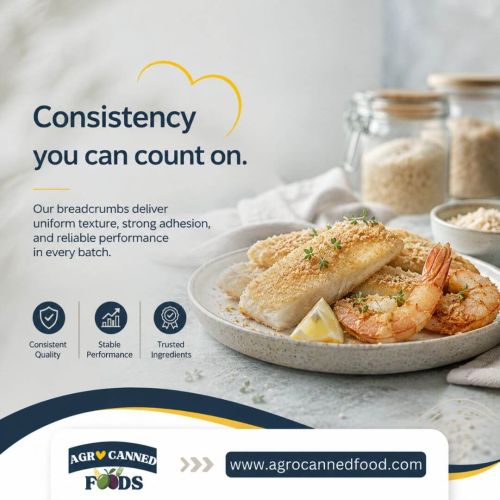
Seafood Processing Challenges
How Batter Viscosity Drift Breaks Fish Coatings | Improve Coating Performance 2026-08-05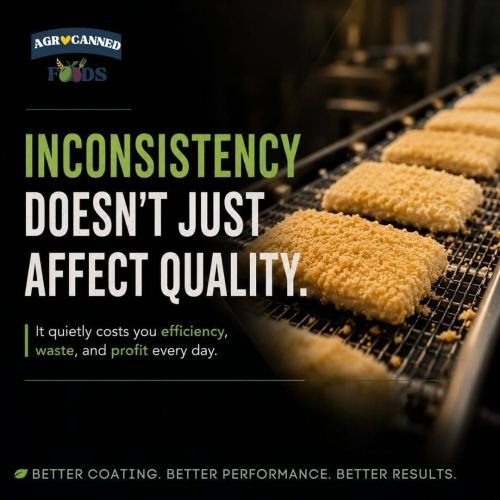
Company News
The Hidden Cost of Inconsistent Coating Pickup 2026-07-06
The Hidden Cost of Inconsistent Coating Pickup When coating pickup becomes inconsistent, the...
Read More
Jalapeño Supplier & Manufacturer: From Farm to Global Markets . In today’s global food industry,...
Read More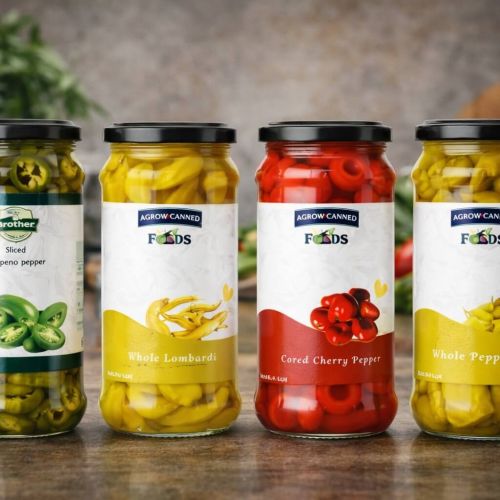
Pickled Pepper Varieties: Understanding the Most востребованные Types in Global Markets . In the...
Read More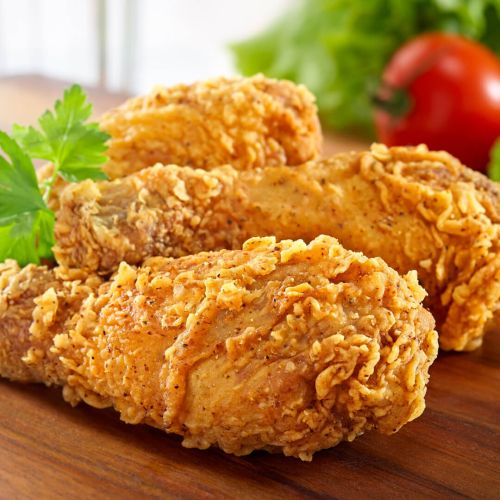
Improving Consistency in Breaded Chicken, Nuggets & Tenders Through Modern Coating Systems...
Read More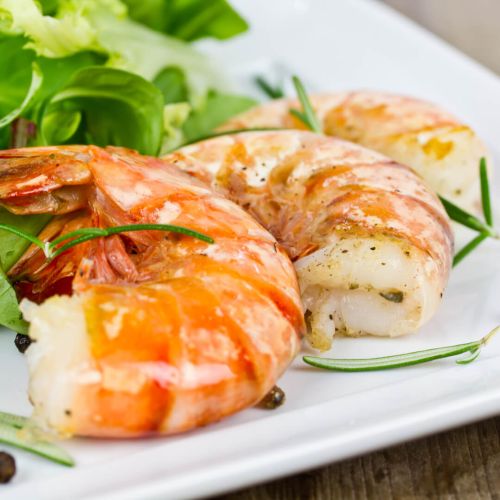
The demand for breaded and coated seafood continues to rise across the UK and Northern Europe....
Read More
Agrocanned’s Natural Colorants deliver clean-label, vibrant shades engineered for reliable...
Read More
Trusted manufacturer and exporter of premium food ingredients and preserved specialties. Experts in Coating Solutions, Preserved Products, and Olive Oil – delivering consistency and quality to food industry professionals worldwide.
 English
 العربية
 Spanish
 Germain