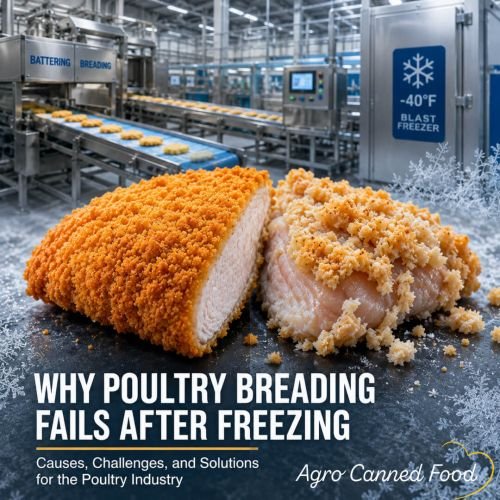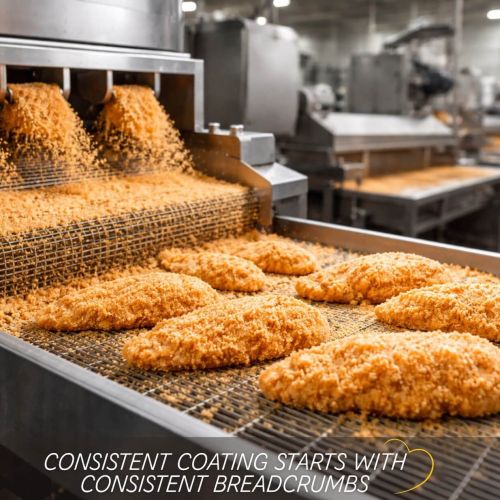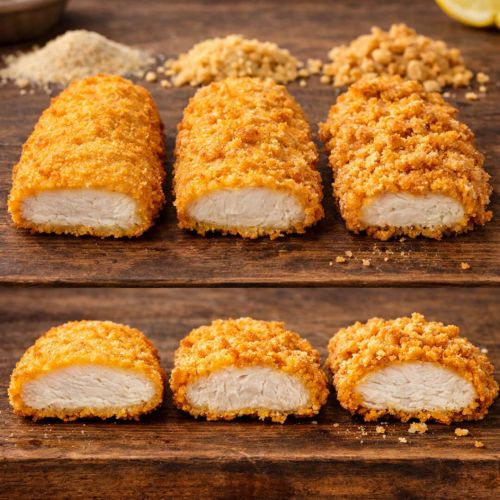
In seafood manufacturing, coating consistency is not simply a quality parameter—it directly affects production efficiency, raw material consumption, product appearance, and customer satisfaction.
Whether producing breaded fish fillets, fish fingers, seafood portions, or coated shrimp, manufacturers expect every product leaving the production line to have the same appearance, coating pickup, and frying performance.
However, many processors notice that coating quality changes throughout the production shift, even though the recipe, breadcrumbs, and production equipment remain unchanged.
One of the most common reasons behind this issue is batter viscosity drift.
Understanding why batter viscosity changes—and how it influences the entire fish coating system—can help seafood manufacturers reduce waste, improve consistency, and optimize production performance.
Batter viscosity describes the flow characteristics of the batter before breadcrumbs are applied.
When the batter has the correct viscosity, it creates a uniform layer around the fish, allowing breadcrumbs to adhere evenly while producing the desired coating thickness and texture.
During production, however, viscosity rarely remains constant.
As processing continues, the batter gradually becomes either thicker or thinner due to several physical and operational factors. This gradual change is known as batter viscosity drift.
Although the variation may seem minor, even small viscosity changes can significantly influence coating adhesion, breadcrumb pickup, frying performance, and the final appearance of coated seafood products.
Several factors contribute to viscosity instability during industrial seafood processing.
Flours and starches continue absorbing water long after the batter has been mixed. As hydration progresses, viscosity gradually increases, changing the batter's coating behavior.
Temperature has a direct influence on batter flow.
Higher temperatures generally reduce viscosity, while lower temperatures increase it. Even small temperature variations inside the production area can affect coating consistency during long production runs.
Throughout production, small breadcrumb particles and fish residues continuously enter the batter tank.
These particles slowly alter the batter composition, making it more difficult to maintain stable viscosity.
The longer a batter remains in circulation, the greater the possibility of viscosity drift.
Without continuous monitoring, manufacturers may not notice the change until coating quality begins to decline.
A complete fish coating system depends on the interaction between batter, breadcrumbs, processing conditions, and frying parameters.
When batter viscosity changes, several quality issues often appear simultaneously.
A batter that becomes too thin cannot effectively hold industrial breadcrumbs on the product surface.
This frequently results in breadcrumb loss during conveying, freezing, or frying.
When viscosity increases excessively, the product retains more batter than intended.
The result is irregular breadcrumb distribution, inconsistent appearance, and higher ingredient consumption.
An unstable coating structure allows additional frying oil to penetrate the product, affecting texture, shelf life, and production costs.
Customers expect every coated seafood product to have the same color, texture, and coating coverage.
Variations caused by viscosity drift often lead to quality complaints and unnecessary product rejection.
Although viscosity drift cannot always be eliminated completely, its impact can be significantly reduced through proper process control.
Recommended practices include:
Successful seafood manufacturers generally treat coating as an integrated production system rather than a combination of individual ingredients.
Many coating issues are initially blamed on breadcrumbs.
In reality, breadcrumbs are only one component of the entire coating process.
The performance of a coated seafood product depends on the compatibility between:
Optimizing only one of these variables rarely delivers consistent long-term results.
Instead, manufacturers increasingly focus on complete coating solutions designed around their specific production requirements.
This approach improves coating adhesion, texture, yield, production consistency, and overall manufacturing efficiency.
For seafood manufacturers, choosing a coating supplier involves more than comparing ingredient specifications.
An experienced supplier should be able to support product development, understand production challenges, and recommend coating systems that match the customer's process and finished product requirements.
This collaborative approach helps manufacturers reduce production losses, improve consistency, and shorten product development cycles.
Batter viscosity drift is one of the most common causes of inconsistent fish coating performance, yet it is often overlooked during troubleshooting.
By understanding how viscosity changes throughout production—and by evaluating the complete coating system rather than individual ingredients—manufacturers can improve coating adhesion, reduce waste, maintain product consistency, and enhance production efficiency.
Whether producing coated fish fillets, shrimp, fish fingers, or other seafood products, stable batter performance remains a key factor in achieving reliable, high-quality results.
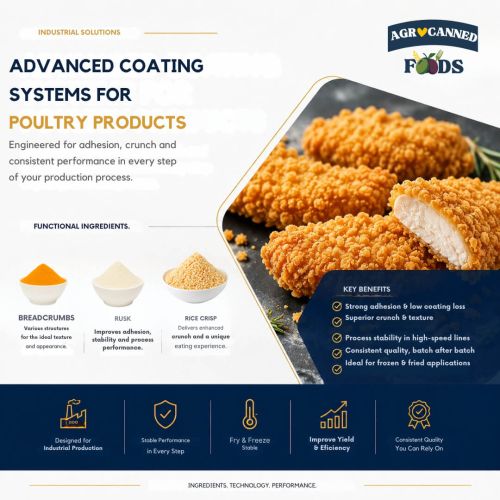
At Agro Canned Food, we develop industrial breadcrumbs, batter mixes, and customized coating systems for seafood, poultry, meat, and ready-meal manufacturers.
Rather than supplying standard ingredients only, our technical team works closely with customers to develop coating solutions tailored to their production lines, processing conditions, and finished product requirements.
If you're looking for a reliable breadcrumb supplier, industrial batter mix manufacturer, or a partner to develop a complete fish coating system, our team is ready to discuss your project.
👉 Contact Agro Canned Food to explore customized coating solutions for your production line.
Seafood Processing Challenges
IQF Freezing Stress and Its Impact on Fish Coating Adhesion 2026-08-05Seafood Processing Challenges

How Batter Viscosity Drift Breaks Fish Coatings | Improve Coating Performance 2026-08-05Company News
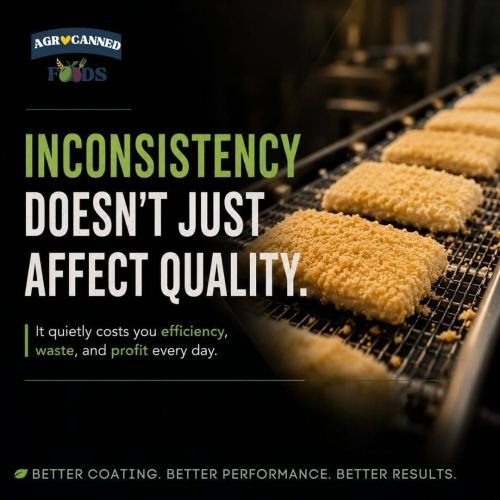
The Hidden Cost of Inconsistent Coating Pickup 2026-07-06IQF Freezing Stress and Its Impact on Fish Coating Adhesion Why IQF Freezing Can Affect Coating...

Read MoreHow Frozen Storage Affects Breaded Fish Quality For many seafood manufacturers, frozen storage is...
Read MoreWhy the Best Breadcrumb Can't Fix the Wrong Batter A seafood processor changes breadcrumb...
Read MoreDelamination Is Not a Fryer Issue — Why Seafood Coating Failures Often Start at Predust...
Read MoreTempura vs Clear Coat Batter: Which System Stabilizes Your Shrimp Line? Executive Perspective In...
Read MoreWhy Fish Fillet Coatings Delaminate After Frying A Technical Guide for Seafood Processors &...
Read More