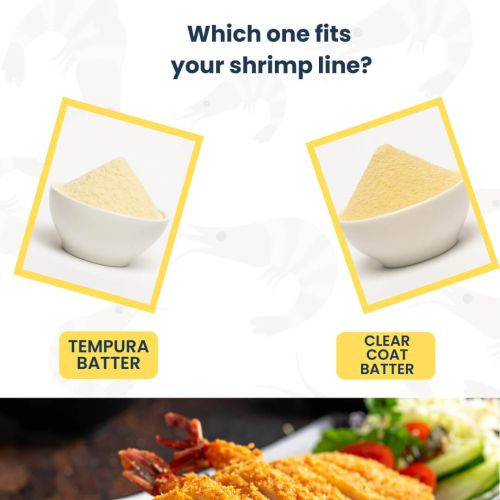
Shrimp coating lines operate under conditions that expose coating weaknesses fast: high surface moisture, delicate structure, rapid freezing, and sensitive frying outcomes.
That’s why batter selection should be treated as a process decision, not a style preference.
Two coating systems are commonly used for shrimp:
Tempura batter → for volume and puffy crunch
Clear coat batter → for light coating and natural color visibility
Both can perform well — if they match your line conditions and product positioning.
A successful shrimp batter must deliver:
Stable adhesion on wet surfaces
Consistent coverage at line speed
Predictable behavior after IQF freezing
Controlled crust formation during frying
Repeatable results across shifts and batches
| Criteria | Tempura Batter | Clear Coat Batter |
|---|---|---|
| Texture outcome | Puffy, airy crunch | Light, clean bite |
| Visual appearance | High volume, thicker | Transparent, natural color visible |
| Best for | Premium/QSR products | Clean-looking premium lines |
| Sensitive to | Fry temp variation, viscosity shifts | Low solids, high moisture before coating |
| IQF impact | Needs stable structure control | Needs strong adhesion consistency |
Choose Tempura batter if you need:
A visibly coated product with volume
Strong crunch perception after frying
A coating that positions the product as premium or QSR-style
Choose Clear coat batter if you need:
A lighter coating that keeps natural shrimp color visible
A clean, uniform appearance
A coating profile designed for minimal masking
If your production includes IQF freezing, your decision should also consider:
freezing stress
storage duration
reheat method (fryer vs oven)
1) Surface moisture control
Most coating failures start here. Shrimp must enter coating with controlled surface wetness and consistent drain time.
2) Batter viscosity consistency
Viscosity must remain stable across shifts. A system that performs during trials can fail during production if viscosity drifts.
3) Frying temperature stability
Small temperature swings change crust formation, color, and expansion — especially for tempura systems.
Failure 1: Patchy coating or uneven coverage
Often indicates inconsistent viscosity or uneven moisture.
Failure 2: Coating slippage or localized delamination
Often indicates low solids or insufficient contact time at line speed.
Failure 3: Fragile crust after freezing and frying
Often indicates freezing stress on a weak adhesion layer or unstable crust formation.
Tempura and clear coat systems are not “better vs worse.”
They are two different tools designed for different shrimp coating objectives.
The correct choice is the one that matches:
your line conditions
your product appearance goals
your freezing and frying requirements
and your repeatability standards

Seafood Processing Challenges
IQF Freezing Stress and Its Impact on Fish Coating Adhesion 2026-08-05
Seafood Processing Challenges
How Batter Viscosity Drift Breaks Fish Coatings | Improve Coating Performance 2026-08-05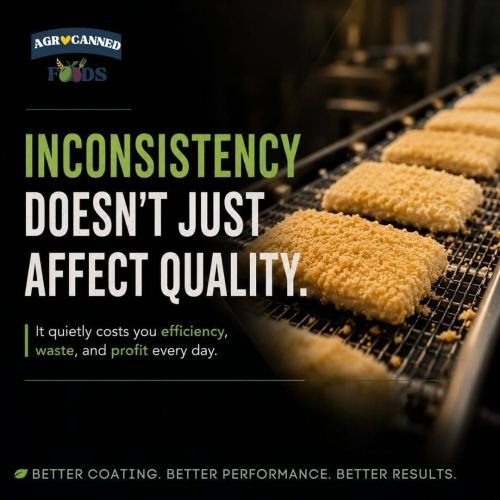
Company News
The Hidden Cost of Inconsistent Coating Pickup 2026-07-06
IQF Freezing Stress and Its Impact on Fish Coating Adhesion Why IQF Freezing Can Affect Coating...
Read More
How Batter Viscosity Drift Breaks Fish Coatings Why Consistent Batter Viscosity Matters in...
Read More
How Frozen Storage Affects Breaded Fish Quality For many seafood manufacturers, frozen storage is...
Read More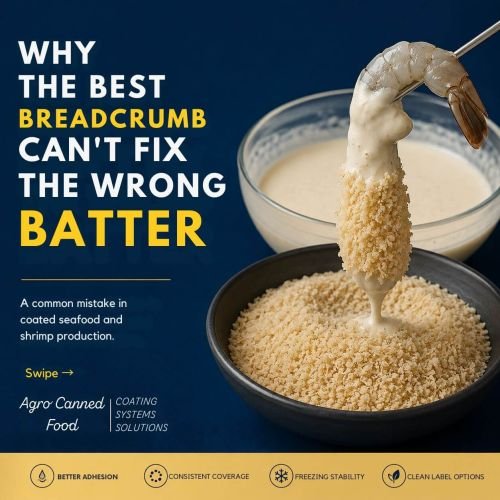
Why the Best Breadcrumb Can't Fix the Wrong Batter A seafood processor changes breadcrumb...
Read More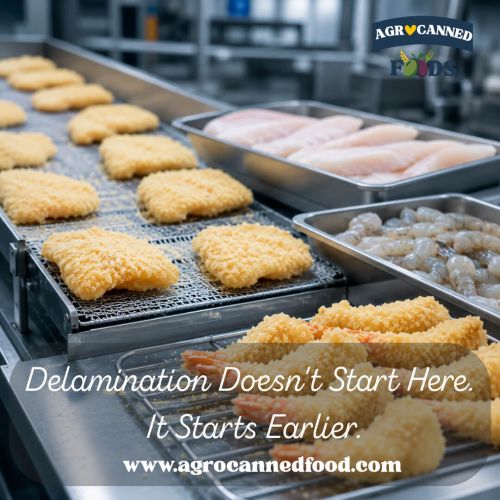
Delamination Is Not a Fryer Issue — Why Seafood Coating Failures Often Start at Predust...
Read More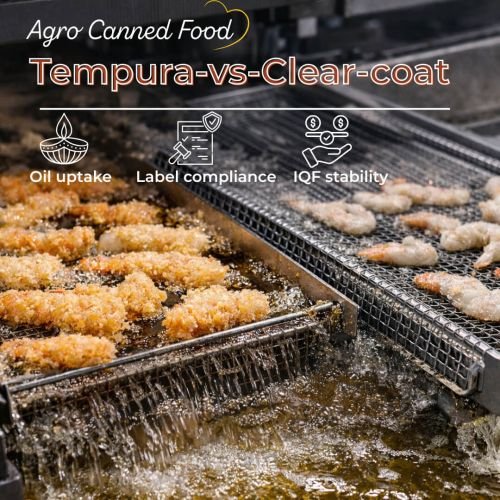
Tempura vs Clear Coat Batter: Which System Stabilizes Your Shrimp Line? Executive Perspective In...
Read More
Trusted manufacturer and exporter of premium food ingredients and preserved specialties. Experts in Coating Solutions, Preserved Products, and Olive Oil – delivering consistency and quality to food industry professionals worldwide.
 English
 العربية
 Spanish
 Germain