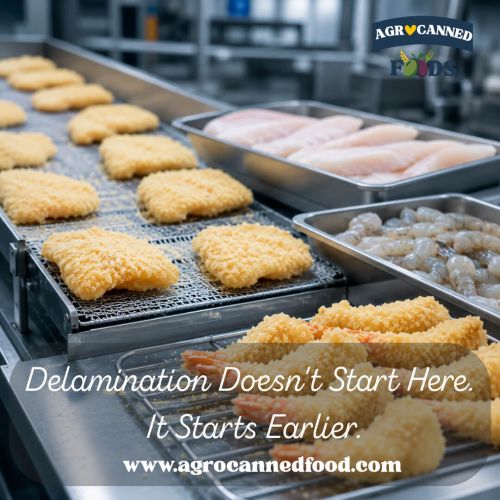
When coating delamination appears in breaded fish fillets, shrimp products, or frozen seafood applications, the fryer is often the first place processors look for answers.
Frying temperatures are adjusted. Dwell times are modified. Equipment settings are reviewed.
Yet the problem frequently remains.
The reason is simple.
In many seafood applications, coating delamination is not created in the fryer. The fryer merely exposes weaknesses that already exist within the coating system.
A coating that separates during frying may have started failing much earlier—during surface preparation, predust application, batter pickup, or moisture management.
By the time delamination becomes visible, the root cause is often hidden several processing stages behind.
Understanding where coating failures truly begin is one of the most effective ways to improve adhesion, reduce coating loss, and increase product consistency across seafood processing operations.
Delamination occurs when one layer of the coating system separates from another.
In seafood products, this may appear as:
These defects affect more than appearance.
They can reduce yield, increase waste, create customer complaints, and negatively impact overall product quality.
For seafood manufacturers, consistent adhesion is essential to maintaining both product performance and profitability.
Delamination usually becomes visible during frying.
As heat penetrates the product, moisture rapidly converts to steam. Pressure builds beneath the coating and weak adhesion points begin to fail.
Because the defect appears in the fryer, many processors assume the fryer caused the problem.
However, frying rarely creates delamination on its own.
Instead, it acts as a stress test.
If the coating system contains weak adhesion zones, poor moisture control, or unstable interfaces between layers, frying will reveal those weaknesses immediately.
The real challenge is identifying where those weaknesses originated.
Predust is often viewed as a simple preparatory step.
In reality, it is one of the most important elements in the entire coating system.
A typical seafood coating structure consists of:
Seafood Surface → Predust → Batter → Breadcrumbs
Every layer depends on the performance of the layer beneath it.
Predust serves several critical functions:
When predust performance is compromised, the entire coating system becomes vulnerable to failure.
Moisture is one of the biggest factors affecting seafood coating performance.
Unlike many other protein applications, seafood products naturally contain high moisture levels and delicate surface structures.
Fish fillets, shrimp, and seafood portions can release moisture during processing, freezing, and cooking.
If this moisture is not properly managed:
This is why moisture control begins before batter application.
A properly selected predust helps regulate surface moisture and improves the overall stability of the coating system.
Different seafood applications require different functionality.
A predust suitable for breaded shrimp may not provide optimal performance on fish fillets or portioned seafood products.
Inconsistent predust coverage creates weak adhesion zones that can later develop into coating failures.
When moisture exceeds the capacity of the predust layer, the bond between coating components becomes unstable.
Predust and batter should work together as part of a complete coating system.
When they are not properly matched, adhesion performance can decline significantly.
Many seafood processors notice recurring symptoms before severe delamination occurs.
| Processing Issue | Possible Root Cause |
|---|---|
| Coating lifting during frying | Weak adhesion foundation |
| Uneven breadcrumb retention | Poor predust distribution |
| Batter separation | Excess moisture or incompatible systems |
| Coating loss after freezing | Weak interface between layers |
| Increased waste and rework | Unstable coating performance |
These indicators often point to coating system weaknesses rather than fryer-related issues.
Successful seafood manufacturers rarely evaluate ingredients in isolation.
Instead, they focus on how the entire coating system performs as a unit.
A stable seafood coating system includes:
Provides moisture control and adhesion support.
Creates a strong bonding layer.
Deliver texture, appearance, and crunch.
Enhance freeze stability and overall performance.
When all components are designed to work together, processors achieve better adhesion, higher yields, and more consistent product quality.
High surface moisture and large coating areas make adhesion especially critical.
Coating retention directly impacts appearance, texture, and consumer perception.
Freeze-thaw cycles place additional stress on weak coating systems.
Complex formulations require strong interaction between every coating layer.
At Agro Canned Food, we understand that coating performance begins long before products enter the fryer.
Our coating solutions are designed to improve moisture management, adhesion, coating stability, and production efficiency across a wide range of seafood applications.
By combining technical expertise with application-focused support, we help seafood manufacturers identify the true causes of coating failures and develop coating systems tailored to their specific products and processing conditions.
Coating delamination is rarely a fryer problem.
Most seafood coating failures originate much earlier in the production process, particularly during moisture management, predust application, and adhesion development.
Processors who focus only on the fryer often overlook the true source of the issue.
By optimizing predust performance and treating the coating system as a complete solution rather than a collection of individual ingredients, manufacturers can significantly reduce coating loss, improve product consistency, and achieve better long-term processing performance.
Common causes include poor adhesion, excess moisture, incorrect predust selection, and weak interaction between coating layers.
In most cases, no. Frying typically reveals weaknesses that already exist within the coating system.
Predust helps manage moisture, improve adhesion, and create a stable foundation for batter and breadcrumb application.
By optimizing moisture control, predust performance, batter interaction, and overall coating system design.
Fish fillets, breaded shrimp, frozen seafood products, and value-added seafood applications often face the greatest adhesion challenges.

أخبار المنتجات
IQF Freezing Stress and Its Impact on Fish Coating Adhesion 2026-08-05
أخبار المنتجات
How Batter Viscosity Drift Breaks Fish Coatings | Improve Coating Performance 2026-08-05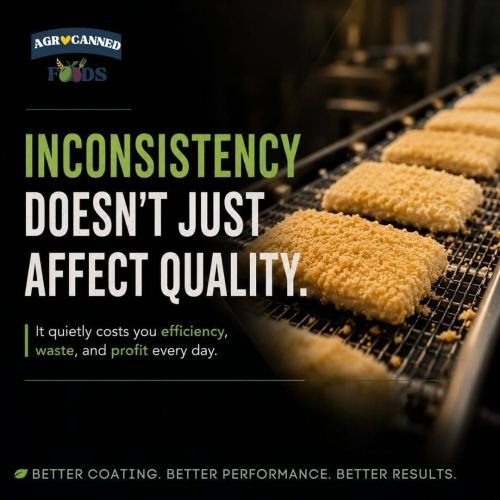
اخبار الشركة
The Hidden Cost of Inconsistent Coating Pickup 2026-07-06
IQF Freezing Stress and Its Impact on Fish Coating Adhesion Why IQF Freezing Can Affect Coating...
أقرأ المزيد
How Batter Viscosity Drift Breaks Fish Coatings Why Consistent Batter Viscosity Matters in...
أقرأ المزيد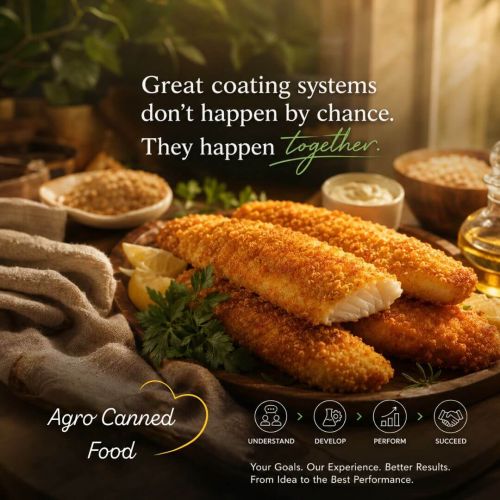
How Frozen Storage Affects Breaded Fish Quality For many seafood manufacturers, frozen storage is...
أقرأ المزيد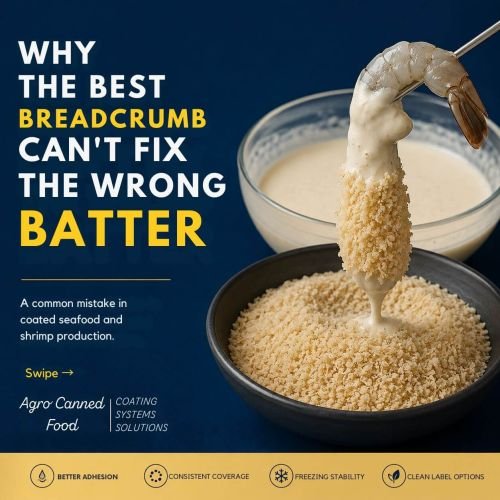
Why the Best Breadcrumb Can't Fix the Wrong Batter A seafood processor changes breadcrumb...
أقرأ المزيد
Tempura vs Clear Coat Batter: Which System Stabilizes Your Shrimp Line? Executive Perspective In...
أقرأ المزيد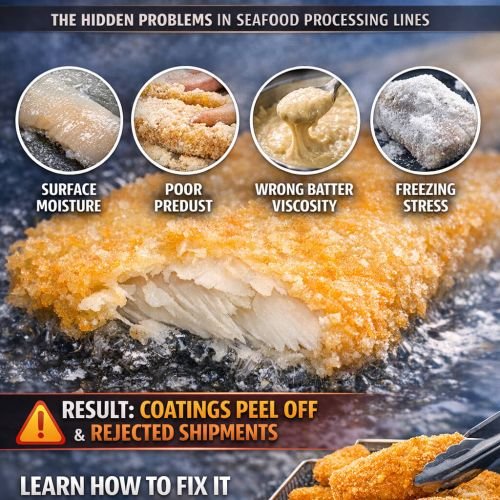
Why Fish Fillet Coatings Delaminate After Frying A Technical Guide for Seafood Processors &...
أقرأ المزيد
متخصصون في تصنيع وتركيب الهياكل الفولاذية مثل الأبراج والأعمدة والمستودعات والأعمدة والخزانات والناقلات بالإضافة إلى تركيب الألعاب المائية للمنتزهات المائية في جميع أنحاء العالم.
 English
 العربية
 Spanish
 Germain