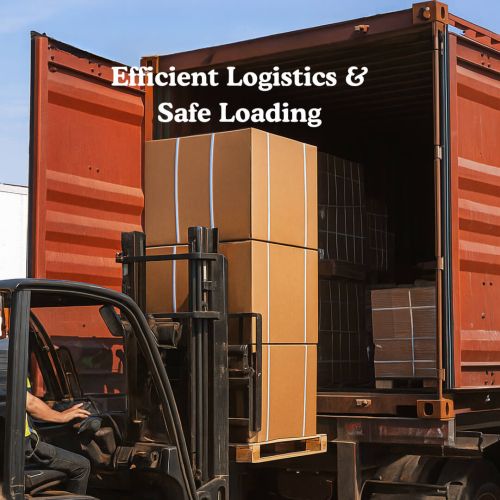
In today’s global food industry, sustainability is no longer optional — it’s essential.
At Agro Canned Foods, we believe that sustainability goes beyond the ingredients we produce. It extends to how we move, store, and deliver our products around the world.
From efficient logistics to safe loading practices, we ensure that every shipment reflects our commitment to environmental responsibility, food safety, and operational excellence.
We begin our sustainability journey long before the product reaches the port.
By optimizing sourcing, reducing waste, and using energy-efficient processes, we minimize our environmental footprint across the production chain.
Our logistics partners are carefully selected for their adherence to eco-friendly standards — including fuel-efficient transportation and optimized route planning — to cut carbon emissions and ensure on-time delivery.
Exporting food products requires precision and timing.
At Agro Canned Foods, we’ve built a logistics system designed for speed, reliability, and efficiency.
Through advanced tracking, smart warehousing, and strategic port partnerships, we reduce transit times and ensure that our rusk, breadcrumbs, and canned products reach customers in perfect condition.
Efficiency in logistics means less energy consumption, lower operational costs, and a smaller carbon footprint — all while maintaining the highest product quality.
Food safety doesn’t stop at the factory gate — it continues all the way to the customer.
That’s why we invest in safe loading procedures, using hygienic, food-grade packaging and temperature-controlled containers where required.
Each shipment is:
✅ Carefully inspected for seal integrity
✅ Loaded under hygienic, contamination-free conditions
✅ Tracked continuously to guarantee safety until delivery
This ensures that our products arrive fresh, clean, and ready for processing or distribution — no compromises.
Sustainability also means being responsible about materials.
Our packaging solutions are designed to minimize waste while ensuring maximum protection.
We continuously explore new ways to incorporate recyclable, lightweight, and eco-friendly materials — supporting the circular economy and reducing landfill waste.
Our commitment to sustainability goes beyond compliance.
We actively work to educate partners, suppliers, and logistics providers about responsible practices, encouraging greener operations across the supply chain.
By integrating sustainability into our export model, Agro Canned Foods helps shape a more responsible future for the food industry — one shipment at a time.
At Agro Canned Foods, sustainability isn’t just a promise — it’s part of our process.
Through efficient logistics, safe loading, and smart distribution, we ensure that every container we export represents not only quality but also care for the planet.
Because delivering food responsibly means feeding the world — sustainably. 🌍
📩 Looking for a reliable, eco-conscious food export partner? Contact us today to learn more about our logistics, packaging, and export solutions.

أخبار المنتجات
IQF Freezing Stress and Its Impact on Fish Coating Adhesion 2026-08-05
أخبار المنتجات
How Batter Viscosity Drift Breaks Fish Coatings | Improve Coating Performance 2026-08-05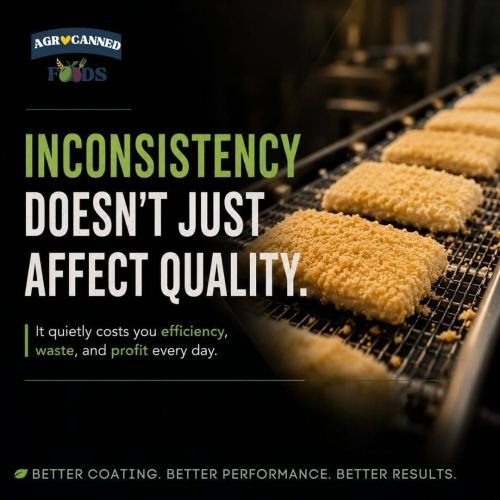
اخبار الشركة
The Hidden Cost of Inconsistent Coating Pickup 2026-07-06
The Hidden Cost of Inconsistent Coating Pickup When coating pickup becomes inconsistent, the...
أقرأ المزيد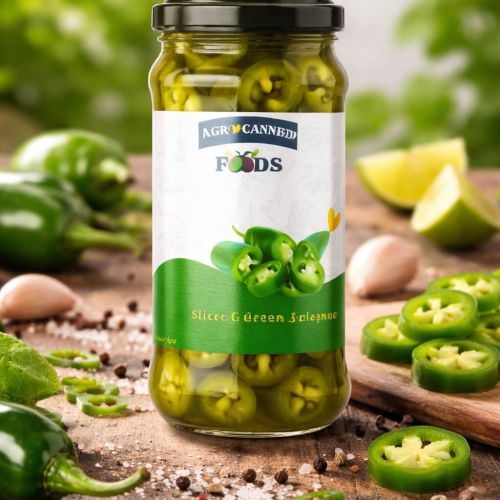
Jalapeño Supplier & Manufacturer: From Farm to Global Markets . In today’s global food industry,...
أقرأ المزيد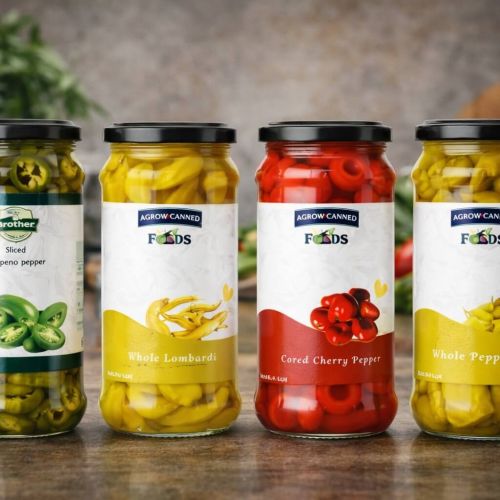
Pickled Pepper Varieties: Understanding the Most востребованные Types in Global Markets . In the...
أقرأ المزيد
Panko vs Standard Breadcrumbs in Fried Chicken: Which One Works Better for Poultry Processing? In...
أقرأ المزيد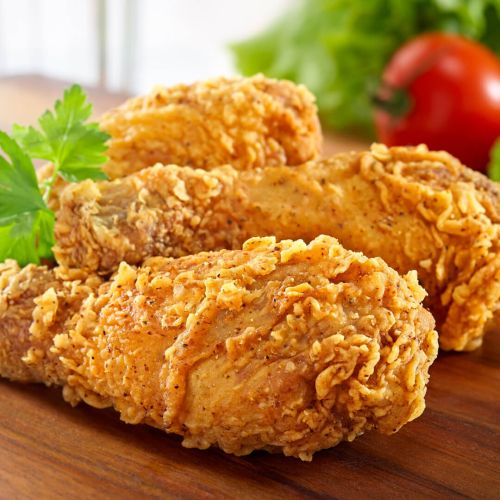
Improving Consistency in Breaded Chicken, Nuggets & Tenders Through Modern Coating Systems...
أقرأ المزيد
The demand for breaded and coated seafood continues to rise across the UK and Northern Europe....
أقرأ المزيد
متخصصون في تصنيع وتركيب الهياكل الفولاذية مثل الأبراج والأعمدة والمستودعات والأعمدة والخزانات والناقلات بالإضافة إلى تركيب الألعاب المائية للمنتزهات المائية في جميع أنحاء العالم.
 English
 العربية
 Spanish
 Germain