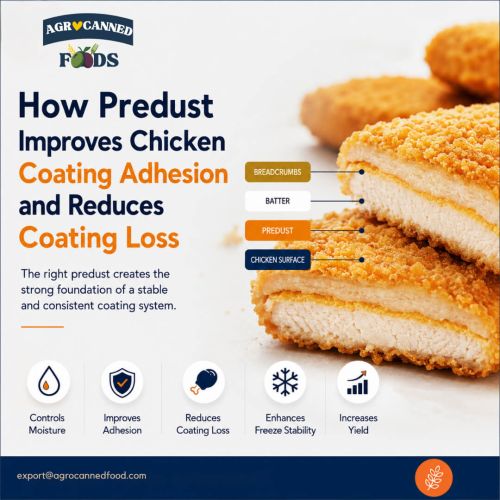
Strong coating adhesion is essential for producing high-quality poultry products. Whether manufacturing chicken nuggets, fillets, strips, or other coated products, the ability of the coating system to remain attached throughout processing directly affects yield, texture, appearance, and customer satisfaction.
Yet many poultry processors experience recurring issues such as breadcrumb blow-off, coating separation, bald spots, and uneven coverage. These problems often become visible after freezing, transportation, or frying, making them difficult to diagnose.
When investigating coating failures, attention is usually directed toward breadcrumbs or batter systems. However, one of the most influential factors is often overlooked: predust.
Predust serves as the foundation of the coating system. It prepares the poultry surface, controls moisture, and creates the conditions necessary for strong adhesion between coating layers. When the wrong predust is selected, the entire coating structure becomes more vulnerable to failure.
Understanding how predust influences adhesion can help manufacturers improve coating retention, reduce waste, and achieve more consistent production performance.
Predust is the first coating layer applied directly to the poultry surface before batter and breadcrumbs.
A typical poultry coating system follows this sequence:
Poultry Surface → Predust → Batter → Breadcrumbs
Although it receives less attention than the final crumb layer, predust plays a critical role in coating performance.
Its primary functions include:
Without a properly designed predust system, even premium batter and breadcrumb solutions may struggle to perform consistently.
Fresh poultry products naturally contain surface moisture.
Excess moisture can dilute batter systems and weaken the bond between coating layers. Predust helps regulate moisture levels by absorbing excess water and creating a more stable coating surface.
This allows the batter layer to develop stronger contact with the poultry substrate.
Poultry products rarely have perfectly uniform surfaces.
Predust helps create a more consistent foundation by filling minor surface irregularities and improving coating uniformity.
This reduces weak adhesion points that may later lead to coating loss.
Predust particles create additional contact points between the poultry surface and batter layer.
These contact points strengthen mechanical adhesion and help maintain coating integrity throughout freezing, handling, and cooking.
Different poultry products require different coating solutions.
A predust designed for nuggets may not perform optimally on fillets, tenders, or formed products.
Using the wrong formulation can result in weak adhesion and inconsistent coating performance.
Both excessive and insufficient moisture can affect coating performance.
When moisture levels are not properly managed, coating layers become unstable and more susceptible to separation.
Inconsistent predust coverage creates weak zones across the product surface.
These areas often appear later as bald spots, poor breadcrumb coverage, or coating defects.
Predust should work in harmony with the batter and crumb system.
When coating components are not properly matched, adhesion strength may decline significantly.
Several common processing issues can indicate predust-related problems:
Identifying these warning signs early can prevent larger quality and yield issues.
| Processing Issue | Possible Predust-Related Cause |
|---|---|
| Breadcrumb Blow-Off | Poor moisture management and weak bonding surface |
| Coating Separation | Inadequate surface preparation before batter application |
| Bald Spots | Uneven predust coverage across the product |
| Low Coating Pickup | Incorrect predust formulation or particle size |
| Excessive Coating Waste | Poor adhesion between coating layers |
| Freeze-Related Coating Loss | Weak foundation unable to withstand freezing stress |
While these issues may appear during frying, freezing, or packaging, many of them originate during the predusting stage.
Nuggets often require predust systems that provide strong adhesion while maintaining high production efficiency.
Fillets typically present greater moisture challenges and may require enhanced moisture-management characteristics.
Strip products benefit from predust systems that support consistent batter pickup and uniform coverage.
Reformed products often require specialized adhesion systems designed to maintain coating integrity throughout processing.
Many coating failures that appear after freezing actually originate much earlier in production.
Weak predust performance may go unnoticed immediately after coating application. However, during freezing, moisture migration and ice crystal formation place additional stress on the coating system.
If the initial bond is weak, these stresses can result in coating separation, crumb loss, and texture deterioration.
This is why processors should evaluate predust performance as part of a complete coating system rather than as an isolated ingredient.
Successful poultry coating systems rely on the interaction of all coating layers.
The predust must effectively manage moisture and prepare the surface. The batter must provide strong film formation and adhesion. The breadcrumb system must deliver texture while maintaining structural stability.
When all components work together, manufacturers achieve:
If you are facing coating separation, breadcrumb blow-off, uneven coverage, or freeze-related coating loss, the root cause may be hidden within your coating system.
Our technical team helps poultry processors evaluate coating performance and identify opportunities to improve adhesion, yield, texture, and production consistency.
Request a customized poultry coating solution tailored to your specific application and processing requirements.
At Agro Canned Food, we understand that coating performance begins long before the breadcrumb layer is applied.
Our coating solutions are designed to help poultry processors optimize adhesion, moisture control, texture development, and overall production efficiency. By combining technical expertise with practical industrial experience, we help manufacturers identify coating challenges and implement solutions tailored to their products and processing conditions.
Whether producing nuggets, fillets, strips, wings, or value-added poultry products, reliable coating performance starts with selecting the right foundation.
To learn more about coating performance and poultry processing challenges, explore:
These resources provide deeper insights into adhesion, texture, freeze stability, and coating system optimization.
Predust is often one of the most overlooked components in poultry coating systems, yet it plays a fundamental role in coating adhesion and long-term product performance.
By controlling moisture, improving surface preparation, and supporting stronger bonds between coating layers, the right predust system helps reduce coating loss, improve yield, and maintain consistency throughout freezing, storage, and cooking.
For poultry manufacturers seeking stronger adhesion and more reliable coating performance, predust selection is not a minor detail—it is a critical part of the solution.
Predust is applied before batter and breadcrumbs to improve moisture control, adhesion, and coating stability.
Yes. Predust helps create stronger bonds between the poultry surface and subsequent coating layers.
Yes. Incorrect predust selection can contribute to coating separation, breadcrumb blow-off, and uneven coverage.
Weak adhesion systems, often linked to predust performance, may fail when exposed to freezing stresses and moisture migration.
Yes. Different poultry products often require different moisture-management and adhesion characteristics to achieve optimal coating performance.

أخبار المنتجات
IQF Freezing Stress and Its Impact on Fish Coating Adhesion 2026-08-05
أخبار المنتجات
How Batter Viscosity Drift Breaks Fish Coatings | Improve Coating Performance 2026-08-05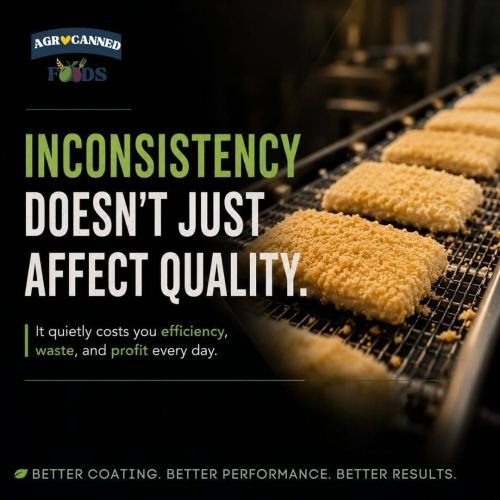
اخبار الشركة
The Hidden Cost of Inconsistent Coating Pickup 2026-07-06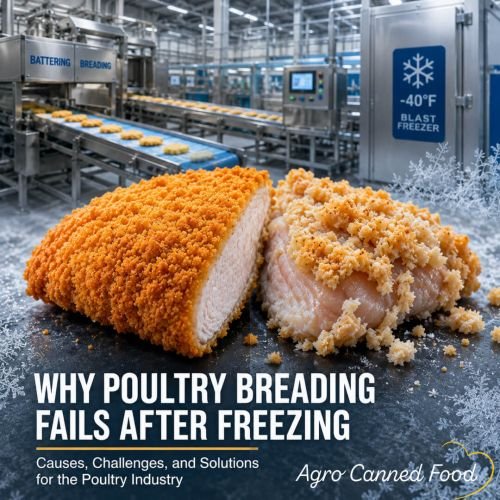
Why Poultry Coatings Fail After Freezing Understanding the Hidden Cost of Coating Failure In the...
أقرأ المزيد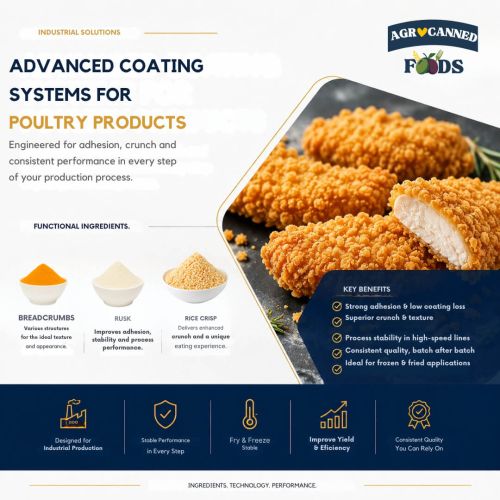
For poultry processors, achieving a crispy coating is only part of the challenge. Many...
أقرأ المزيد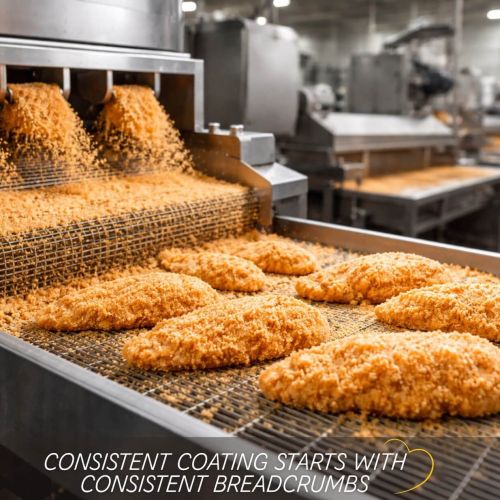
Color Consistency in Poultry Coatings Explained: The Critical Role of Breadcrumb Performance...
أقرأ المزيد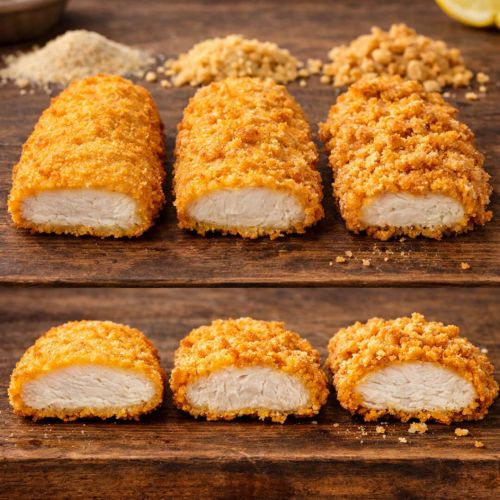
How Breadcrumb Particle Size Changes Chicken Texture In breaded chicken products, texture is...
أقرأ المزيد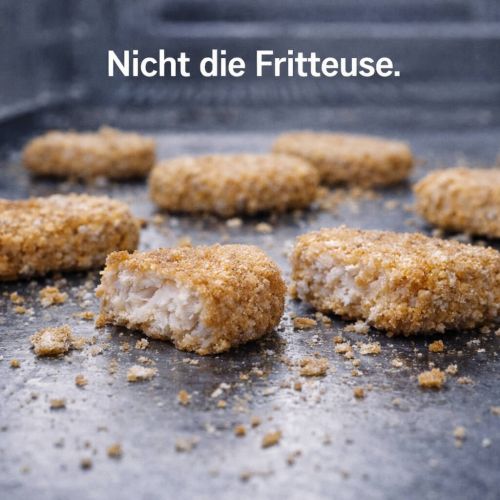
Not a Fryer Issue: Understanding Poultry Coating Failures in Industrial Lines In poultry...
أقرأ المزيد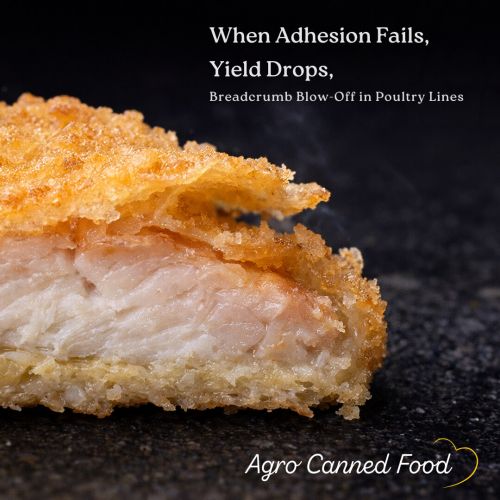
Breadcrumb Blow-Off in Poultry Products: The Real Causes Behind Coating Loss Breadcrumb blow-off...
أقرأ المزيد
متخصصون في تصنيع وتركيب الهياكل الفولاذية مثل الأبراج والأعمدة والمستودعات والأعمدة والخزانات والناقلات بالإضافة إلى تركيب الألعاب المائية للمنتزهات المائية في جميع أنحاء العالم.
 English
 العربية
 Spanish
 Germain